First Grizzly Bear Sighting of 2026 – March 9th
First Grizzly Bear Sighting of 2026: Yellowstone’s Northern Range
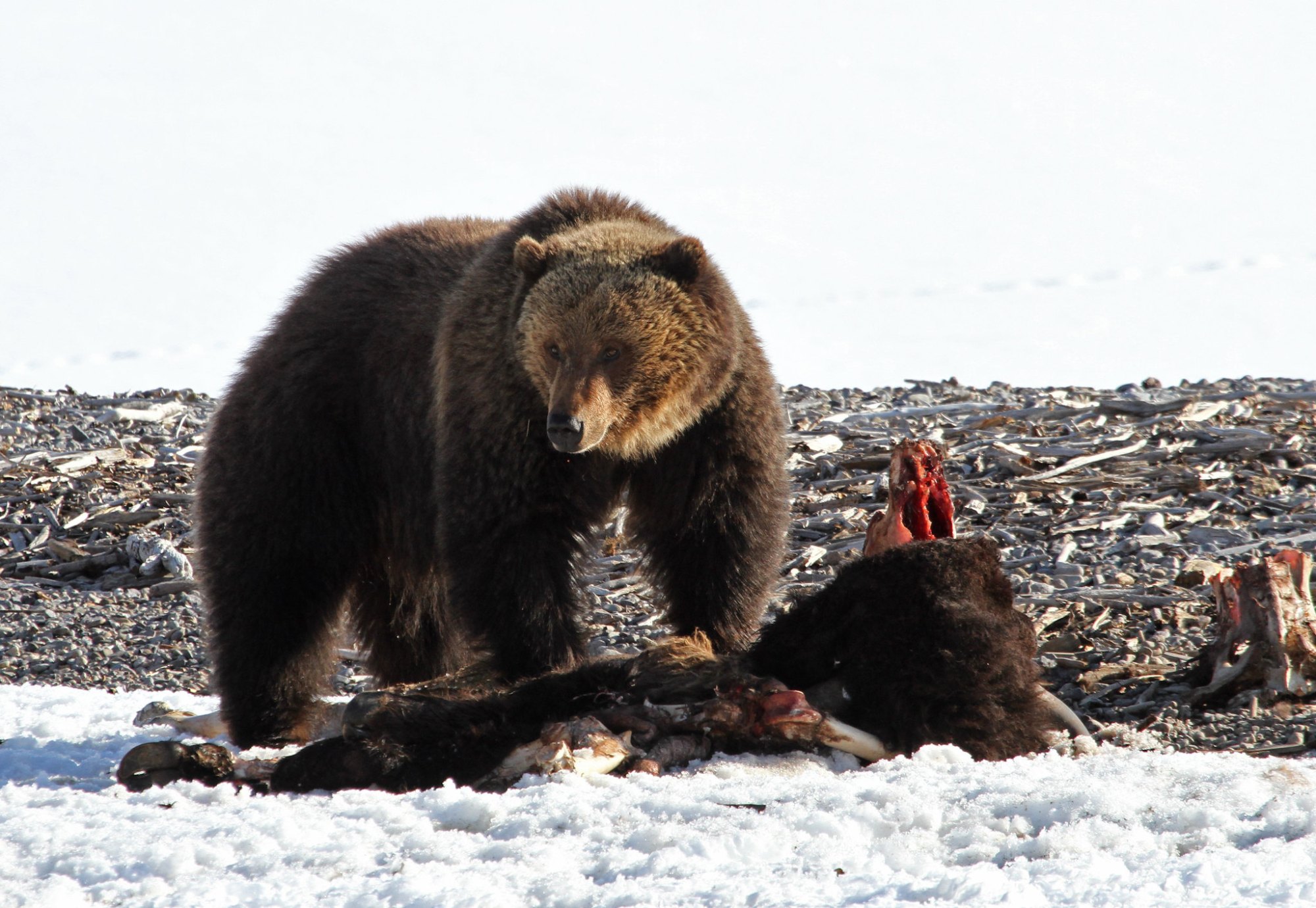
The 2026 wildlife season has officially begun! On March 9th, 2026, biologists in Yellowstone’s Northern Range backcountry spotted the first grizzly bear of the year. Given the unseasonably warm winter in the Greater Yellowstone Ecosystem (GYE), this early emergence comes as no surprise to local experts.
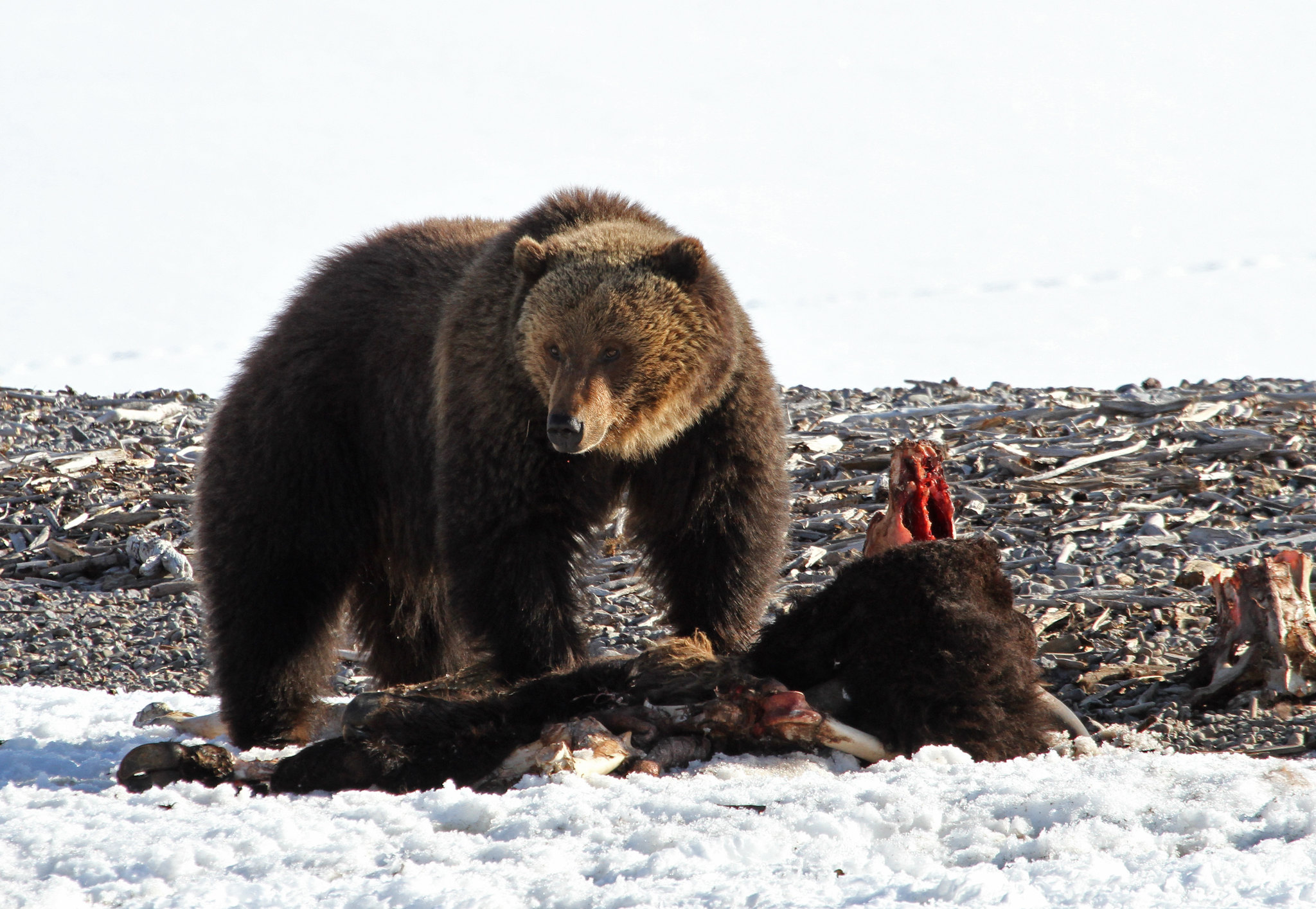
A large male grizzly (boar) in northern Yellowstone feeding on a winter-killed bison carcass, March 9th, 2026.
Why Are Grizzlies Waking Up Early?
Warm temperatures and a high count of “winter-killed” carcasses—specifically bison—are powerful lures for hungry bruins. A grizzly’s nose contains hundreds of millions of olfactory receptors, allowing them to catch the scent of a meal from miles away.
Tracking Grizzlies in Grand Teton and Jackson Hole
Male grizzlies, or boars, are typically the first to emerge from hibernation. At Teton Wilderness Tours, this is the time of year we begin scanning the snowbanks north of Jackson Hole and along the John D. Rockefeller Jr. Parkway for fresh tracks crossing the roadway. Historically, sightings in the southern part of the ecosystem occur almost simultaneously with those in northern Yellowstone.
Read More: Check out the official update from the National Park Service.
From “COYs” to Legends: Looking for Grizzly 399
While the big boars are out now, the rest of the population will emerge “one by one” through early May. The last to rouse are the mothers with Cubs of the Year (COYs).
These families, like late, world-famous Grizzly 399, are the stars of our Grand Teton National Park tours. We frequently spot them in iconic locations such as:
-
Oxbow Bend
-
Willow Flats
-
Pilgrim Creek
Did you know? When these cubs are born in January, they are blind, hairless, and weigh only 11 ounces. By the time they emerge in spring, they’ve grown to 10–20 pounds just by nursing while curled up with mom in the den!
Spring Bear Safety and Backcountry Preparedness
As we transition to our summer backcountry horseback rides, bear safety is a top priority. We are now in “Bear Awareness” mode and carry bear spray on every excursion.
While our team has a perfect safety record—none of our guides have ever had to deploy bear spray on a tour—it is essential to be prepared.
Expert Guide: Learn how to use bear spray effectively from the National Park Service before you head into the backcountry: